Being with dark and light

Hello friends,
Light and darkness was the theme this year at the Florence Biennale, which has just closed for this season. The theme was designed to bring out the hidden unity of apparent opposites, drawing from the oldest spiritual teachings and texts known to us today – the Ṛgveda from India and the Book of Changes (I Ching) in China. These texts both contain a key teaching about polarity, as symbolised by the yin and yang icon.
“Everything has its opposite and everything contains the seed (or a small part) of its opposite. Opposites have a mutual origin and one cannot exist without the other. Expansion and contraction. Order and disorder. Male and female. Day and night. Light and darkness. Good and evil.”
Giovanni Cordoni, events manager at the Florence Biennale
Art and philosophy, in our civil world, gives us an opportunity to explore this concept of oneness, and are vital for our souls to understand the world around us. We use it to process the beauty, the finite, the transcendental, the contradictory, and the painful elements of human experience – helping us realise that we are not a single life playing a game of solitaire, but part of an expansive, time-bending whole.
Seeing the light in darkness and vice versa allows us to open ourselves to negotiation, cooperation and respect. This balanced view of things creates a dialogue within ourselves too, so that we can approach our experiences with curiosity and kindness.
This time of year is a perfect time to explore these deeper layers of meaning. The outside grows colder, the sun takes its time traversing the southern hemisphere, and we are invited to nest, to create pockets of warmth and slowness, times when we allow ourselves to be bored, be tired and look inwards.
Ten thousand flowers in spring
by Wu-men
Ten thousand flowers in spring, the moon in autumn
A cool breeze in summer, snow in winter
When your mind is not clouded by unnecessary things,
This is the best season of your life.
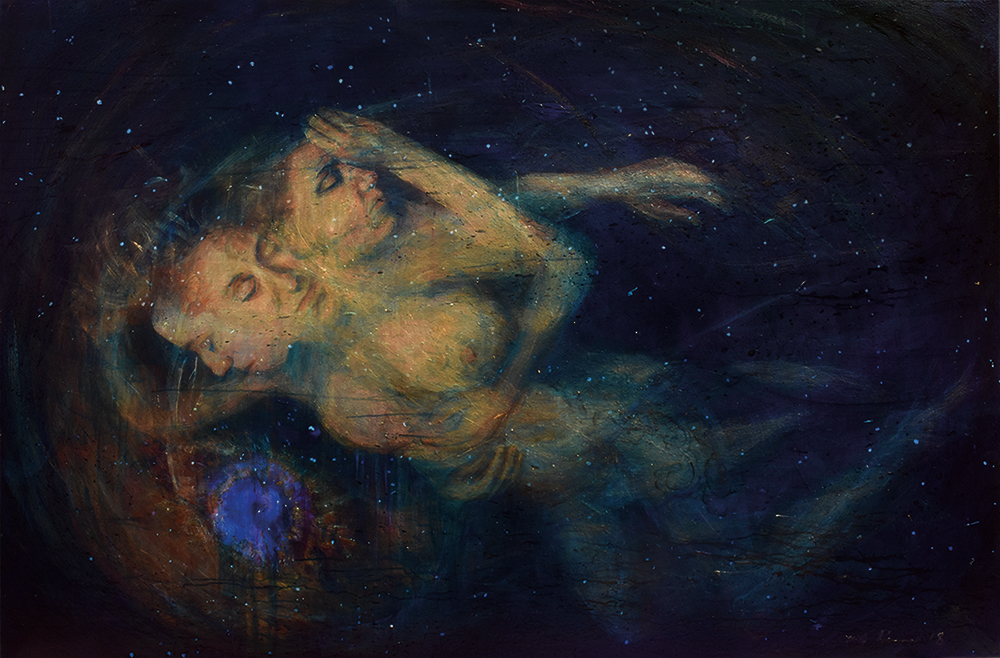
Dark matter is out there
Nearly 100 years after astronomer Fritz Zwicky predicted that there must be a gravitational influence that stopped planets whizzing apart from each other, dark matter may have been observed in the universe for the first time.
A team led by Tomonori Totani at the University of Tokyo have analysed data from the Fermi Gamma‑ray Space Telescope that includes 15 years’ worth of observations. They claim they’ve detected a “halo-like” glow of gamma rays around the middle of the Milky Way that matches what one would expect if dark matter particles were annihilating each other.
Researchers aren’t certain that this is dark matter, and future observations will be needed to confirm whether it is.
Perhaps the most profoundly fascinating element of the universe is that it is not static or unchanging. The great vacuum beyond our atmosphere was at one time, born into existence, and continues evolving and expanding beyond any conceivable imagination. The greatest limitless mystery of the universe is a tantalising opportunity for our relatively limited time on earth. Our solar system has around 5 billion years left before the sun runs out of hydrogen fuel and begins to expand into a red giant. Humans have only existed in their various forms for millions of years, and we can’t be sure how long our variation of species and civilisation will prevail. From early humans to future generations, we look up at the sky and wonder if we are the only ones watching it, investigating it – if we’re the only ones able to form theories and observations over it. And what if we are?
I’ve written before about the power of space to draw us closer to our home planet. The power of “out there” is really only important if we use it to better understand ourselves. The deepest reaches of astrophysics can only take us so far. Eventually, we will need to see that our incessant search outward is actually a desperate attempt to find inner meaning, and perhaps, that it is the meaninglessness of it all that gives it such radical significance.
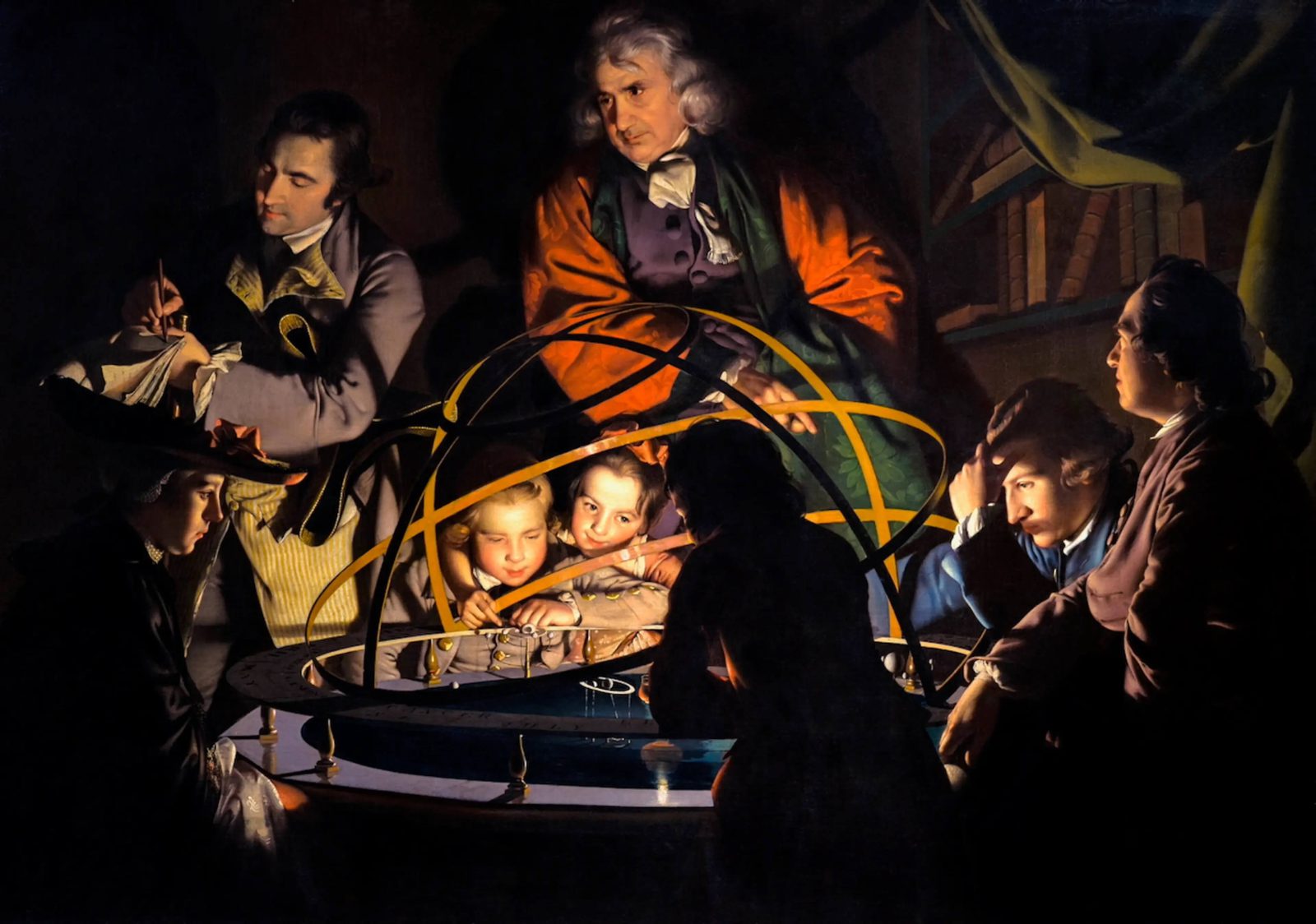
Beauty and the shadows
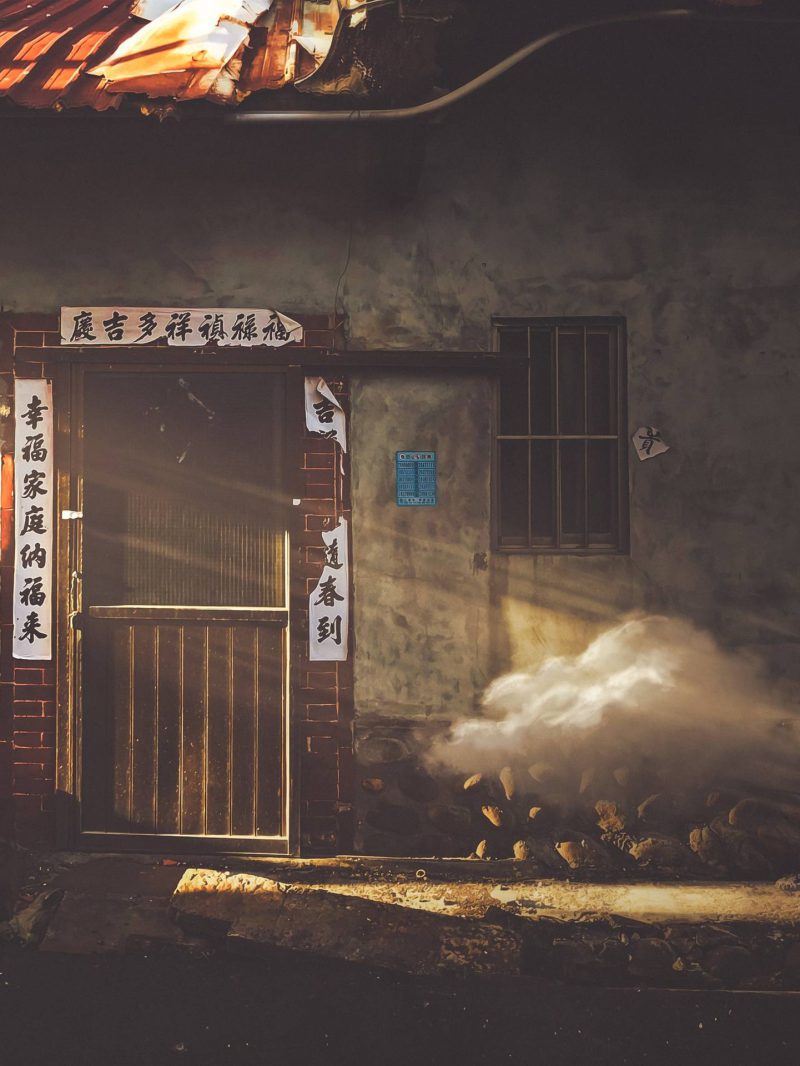
So much of great painting and photography is light – just as so much of life is to do with the light we see it in. The beauty of a boring day can be transformed as the sun appears low under moving clouds, revealing that incandescent pinkness that puts the finest of nature’s filters on the faces of bare trees and gilds the tops of otherwise brutal buildings. The morning sun pouring between blinds can turn a quotidian cup of tea into a masterwork, a living watercolour. But what brings that light to life is the darkness from which it emerges.
We know about Rembrandt’s masterful use of light and shade. But this year, it’s time for Joseph Wright of Derby to have his moment. At the National Gallery until May next year, From the Shadows features the first major exhibition of Wright’s candlelight works. To look at them is to be transported to darkened lecture halls, or 18th-century parlour rooms, to feel the fascination of the Enlightenment era with its burgeoning scientific discoveries in both astronomy and the human body, as well as developments in art and mass urbanisation.
Derby uses light sparingly, to enormous effect. In “A Philosopher Giving That Lecture…” I can almost smell the wood varnish from the floor, the mustiness of heavy fabrics, and feel the stiff boots on my cold, woollen-stockinged feet. In “An Experiment on a Bird…”, the soft light brings the troubled faces of onlookers into near animation, as a bird perishes in the bell jar. Derby was unafraid of the dark as he was dark subjects, and the charm of his work is often at odds with the content. Light and dark appear at once, becoming more special not despite but because of each other.
Wright of Derby: From the Shadows is at the National Gallery until May 2026.
Until next time…
May you be happy, well, whole and free.
~~~~~~
Invite your friends to subscribe!
![]() Being with dark and light
Being with dark and light![]() Don't leave!
Don't leave!![]() Unlikely meeting points & unlikely collaborations 🌗
Unlikely meeting points & unlikely collaborations 🌗![]() Sit in the middle of things 🧘♀️🪻
Sit in the middle of things 🧘♀️🪻![]() 5 things I learned at a Buddhist monastery
5 things I learned at a Buddhist monastery![]() 6 good things to do
6 good things to do![]() Extraordinary ordinariness: space orbits and sleeping dogs
Extraordinary ordinariness: space orbits and sleeping dogs![]() The ebb and flow of things
The ebb and flow of things![]() A short breath in the bardo
A short breath in the bardo![]() A slender cord of grace
A slender cord of grace![]() Artists reflect on water
Artists reflect on water![]() A love letter to a loaded gun
A love letter to a loaded gun![]() Are you for real?
Are you for real?![]() What is a good life?
What is a good life?![]() Who decides what you think?
Who decides what you think?![]() When new year should be according to history...
When new year should be according to history...![]() Does Mozart really make you smarter?
Does Mozart really make you smarter?![]() Old stories to find light in dark times
Old stories to find light in dark times![]() The human need to put things together
The human need to put things together![]() The power of trends: the good, the bad and the pumpkin-spiced.
The power of trends: the good, the bad and the pumpkin-spiced.![]() From terrestrial to celestial – where do we find inspiration?
From terrestrial to celestial – where do we find inspiration?![]() The illusion of ownership
The illusion of ownership![]() Let’s go down the rabbit hole 🐇
Let’s go down the rabbit hole 🐇![]() Identity, the artist, and #goblinmode
Identity, the artist, and #goblinmode![]() Punk and her godmothers
Punk and her godmothers![]() The ultimate journey – homecoming, heroes and wholeness.
The ultimate journey – homecoming, heroes and wholeness.![]() It’s mushroom month...
It’s mushroom month...![]() Robots, AI and artistry, oh my!
Robots, AI and artistry, oh my!![]() Longevity, love and memory...
Longevity, love and memory...![]() Summer, Freud and a sonnet...
Summer, Freud and a sonnet...![]() When surreal makes sense – exploring with Dorothea Tanning, Olga Tokaczuk and more...
When surreal makes sense – exploring with Dorothea Tanning, Olga Tokaczuk and more...![]() Twists and turns with Mary Oliver, Alan Watts and Astrid Lindgren...
Twists and turns with Mary Oliver, Alan Watts and Astrid Lindgren...![]() First flowers of spring: the need for beauty and hope at all times
First flowers of spring: the need for beauty and hope at all times![]() Defining reality, playing with illusion with Robert Frost, Hilma Af Kilnt and more...
Defining reality, playing with illusion with Robert Frost, Hilma Af Kilnt and more...![]() Celebrating the cycles of light and dark with Joan Didion, Danez Smith and more...
Celebrating the cycles of light and dark with Joan Didion, Danez Smith and more...
 Who is the real you?
 How nature guides us back to our true selves
 12 good things from 2025 🕯️
 Being with dark and light
 Don't leave!
 Unlikely meeting points & unlikely collaborations 🌗
 Sit in the middle of things 🧘♀️🪻
 5 things I learned at a Buddhist monastery
 6 good things to do
 Extraordinary ordinariness: space orbits and sleeping dogs
 The ebb and flow of things
 A short breath in the bardo
 A slender cord of grace
 Artists reflect on water
 A love letter to a loaded gun
 Are you for real?
 What is a good life?
 Who decides what you think?
 When new year should be according to history...
 Does Mozart really make you smarter?
 Old stories to find light in dark times
 The human need to put things together
 The power of trends: the good, the bad and the pumpkin-spiced.
 From terrestrial to celestial – where do we find inspiration?
 The illusion of ownership
 Let’s go down the rabbit hole 🐇
 Identity, the artist, and #goblinmode
 Punk and her godmothers
 The ultimate journey – homecoming, heroes and wholeness.
 It’s mushroom month...
 Robots, AI and artistry, oh my!
 Longevity, love and memory...
 Summer, Freud and a sonnet...
 When surreal makes sense – exploring with Dorothea Tanning, Olga Tokaczuk and more...
 Twists and turns with Mary Oliver, Alan Watts and Astrid Lindgren...
 First flowers of spring: the need for beauty and hope at all times
 Defining reality, playing with illusion with Robert Frost, Hilma Af Kilnt and more...
 Celebrating the cycles of light and dark with Joan Didion, Danez Smith and more...